Eye care services
Children’s Eye Exams
Eye exams for infants, children and teens, and guidance on when to bring them in. Your child doesn’t need to read or know their letters to have a full eye exam.
New page written from published Canadian guidance.
Sources: Canadian Association of Optometrists, BC Doctors of Optometry, the MSP optometry payment schedule and BC Employment and Assistance policy (a claim-by-claim source list comes with this draft), plus verbatim sentences from the clinic’s FAQ. The optometrists must approve every clinical statement, the youngest age seen, whether drops are used, and what families pay after MSP. Photo shoot needed: a child’s eye exam.
Why it matters
Why Do Children Need Eye Exams?
Even if you don’t think your child has any eye issues, it is really important to bring them in for an eye exam; children’s ocular problems often go undiagnosed as they are not always obvious to parents, and the child may not know to complain.
A comprehensive eye exam with an optometrist checks how clearly your child sees, how well their eyes work together and the health of their eyes. It can find problems such as lazy eye (amblyopia), an eye turn (strabismus) and the need for glasses. Lazy eye is easier to treat when it is found early, ideally in the preschool years.
A school vision screening is a quick check, not a full eye exam, so it doesn’t replace your child’s regular eye exams.
Exam schedule
When Should My Child Have an Eye Exam?
For children with no symptoms and no known eye problems, these are the recommended times for an eye exam.
Babies
A first eye exam during your baby’s first year, from about six months of age.
Preschoolers
At least one eye exam between the ages of 2 and 5.
School-age children and teens
An eye exam every year until they turn 19.
Children with symptoms, an eye condition or a family history of eye problems may need eye exams more often. Your optometrist will tell you when to come back.
First-exam age.
The current site gives four different ages for a child’s first exam: 6–9 months (Comprehensive Eye Exams), 6 months–1 year (FAQ Q7), 6–12 months (October 2026 lazy-eye post) and 3–5 years (Lazy Eye post). This page uses neutral wording (“first year, from about six months”) until the doctors choose one schedule for every page. FAQ Q7 also says yearly from age 3, where this page says at least once between 2 and 5.
Signs to watch for
Does My Child Need an Eye Exam Sooner?
Children may simply assume everyone sees the way they do, so they rarely complain. Book an eye exam if you notice:
- An eye that turns in or out
- Covering or closing one eye
- Squinting, eye rubbing or a lot of blinking
- Holding books, toys or screens very close
- Avoiding books or TV
- Red, itchy or watery eyes, or sensitivity to light
- Headaches, frustration or a short attention span
- In babies: eyes that still don’t line up after six months of age need prompt attention
For an eye injury or a sudden change in your child’s vision, see emergency eye care.
At the clinic
What Happens at Your Child’s Eye Exam
Questions first
We talk with you about your child’s health, any family history of eye problems, and anything you’ve noticed at home or at school.
How clearly they see
We check vision with pictures, shapes or letters, depending on your child’s age. We can also measure their prescription with a light and lenses, without needing answers from them.
Eyes working together
We look at eye alignment and how the eyes move and focus as a team, plus depth perception (3D vision) and colour vision.
Eye health
The optometrist checks the health of the front and back of the eyes with a bright light and magnifying lenses. If drops are needed to widen the pupils or relax focusing, we’ll explain why first.
What to bring
If you’re new to us, make sure you bring your B.C. Service Card (it has your PHN on the back), your extended health insurance information if you have any, a list of your current medications if applicable, and any glasses you currently use (even if they’re broken or just over-the-counter readers).
Coverage
Coverage for Kids’ Eye Exams
-
MSP
Routine eye exams for children and teens under 19 are an MSP benefit in BC, once every 11 months. MSP covers a portion of their eye exam so the cost is lower for children to undergo annual eye tests.
MSP covers a portion -
Extended health, FNHA and IFHP
An extended health plan may also help with eye exams and glasses. We can direct bill most insurances for you, and we are fully set up to directly bill under IFHP and FNHA for your eye exams and glasses.
-
BC income or disability assistance
Children in families on BC income or disability assistance can get one pair of glasses a year through BC Employment and Assistance. Please ask our office how this works for your child.
Our fees depend on the service provided. Please contact our office to discuss what would be the right appointment for you.
Glasses and myopia
If Your Child Needs Glasses
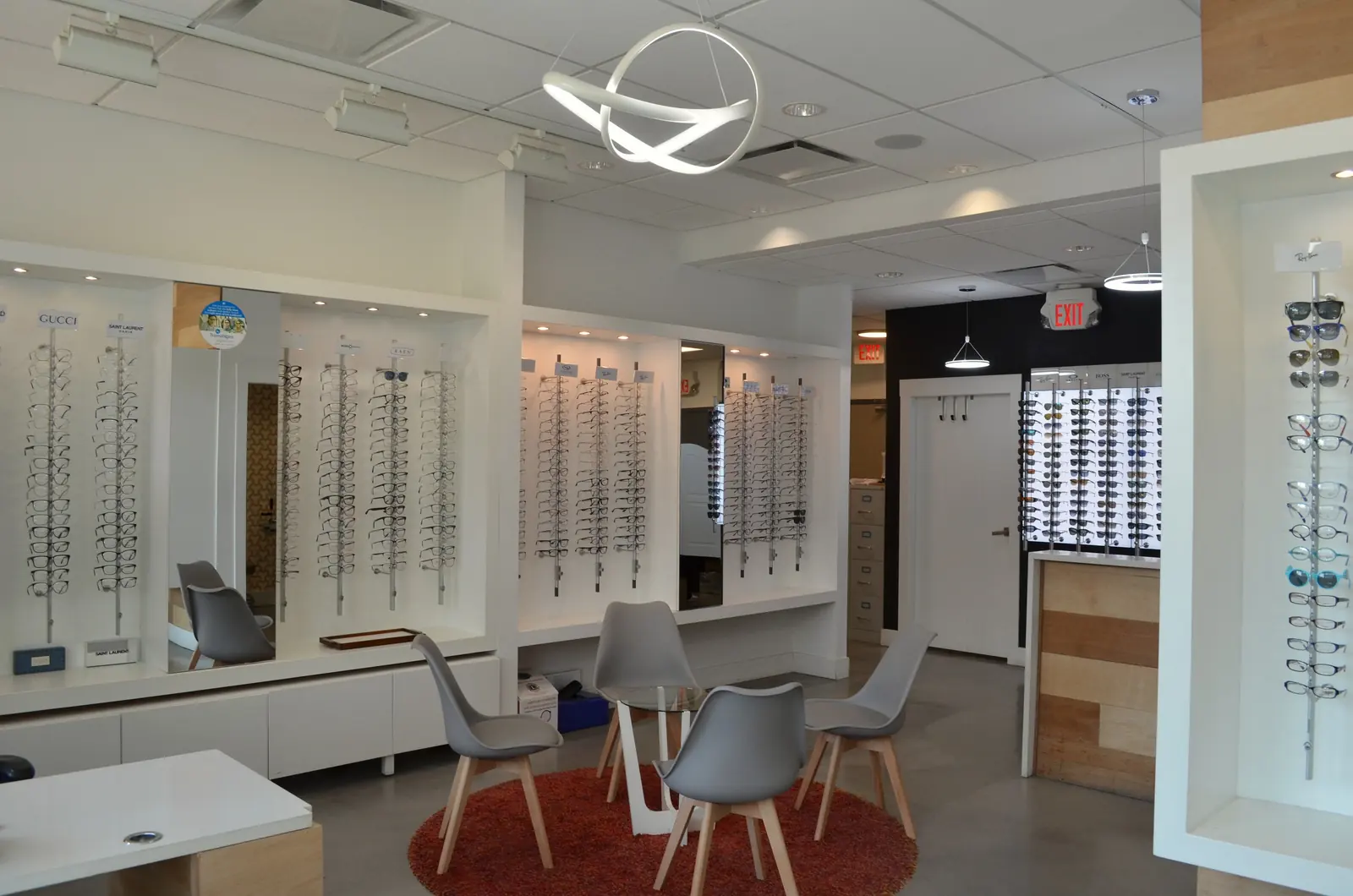
You will leave our clinic with a copy of your new glasses prescription in hand. As we are a full service optical store as well, we can help you find your new pair of glasses in our store when you’re done with your exam.
If your child is nearsighted (myopic), ask us about myopia control: options that aim to slow how quickly nearsightedness increases during childhood.
FAQ
Kids’ Eye Exam Questions
Have a question we haven’t answered here? Call us at (604) 553-3900 and our team will be happy to help.
All FAQsWhen should my child have their first eye exam?
We recommend a first eye exam during your baby’s first year, from about six months of age. After that, children should have at least one eye exam between the ages of 2 and 5, and then an eye exam every year until they turn 19.
Does my child need to know their letters?
No. We can check vision with pictures, shapes or letters, depending on your child’s age, and we can measure their glasses prescription without needing answers from them.
Is a school vision screening the same as an eye exam?
No. A vision screening is a quick check to flag possible problems. A comprehensive eye exam with an optometrist looks at how your child sees, how their eyes work together and the health of their eyes, and can diagnose conditions such as lazy eye, an eye turn or the need for glasses.
Will my child’s eyes be dilated?
Not always. Sometimes drops are used to widen the pupils or relax focusing, so the optometrist can measure the prescription accurately and see the back of the eye clearly. If drops are recommended for your child, we’ll explain why first.
My child already wears glasses. Do they still need a yearly eye exam?
Yes. Children’s eyes change as they grow, and a yearly exam keeps their prescription up to date and checks the health of their eyes.
Are children’s eye exams covered by MSP?
Kids are partially covered under MSP, so there is a very low cost to bring them in for the routine check-ups. Routine eye exams for children and teens under 19 are an MSP benefit in BC, once every 11 months. Please bring your child’s B.C. Service Card to the exam.
Could my child be nearsighted?
If your child squints to see things far away or holds books and screens very close, they may be nearsighted (myopic). Myopia often starts in childhood, and there are options that aim to slow it down.
Book a visit
Request an Appointment
We will respond by phone or e-mail within 24 hours. If you’re looking to book urgently, give us a call during operating hours at (604) 553-3900.