Eye care services
Myopia Control
Nearsightedness (myopia) usually starts in childhood and can keep increasing as children grow. Myopia control is care that aims to slow it down. Our optometrists can check your child’s eyes and talk with you about the options.
New page written from published Canadian guidance.
Sources: Canadian Association of Optometrists, BC Doctors of Optometry, IMI 2025, WSPOS 2025, the MSP optometry payment schedule (a claim-by-claim source list comes with this draft). The optometrists must approve every clinical statement. Options are shown as categories until the clinic confirms which it offers (and which products); brand names stay off the page until then. Photo shoot needed: a child’s myopia visit and a child trying on frames.
Understanding myopia
What Is Myopia?
Nearsightedness, or myopia, can keep increasing every year, typically in children. With higher levels of myopia, there is an increased risk to the health of the eyes. Our doctors can talk to you about myopia control, which involves implementing different strategies to slow down the progression of myopia in your child so that they have less risk of developing preventable eye disease when they’re older.
Myopia, or nearsightedness, means things up close look clear while things far away look blurry. It usually happens because the eye grows too long from front to back, or because the front of the eye (the cornea) is too steeply curved, so light focuses in front of the retina instead of on it. Regular glasses and contact lenses make things clear again, but they are not designed to slow myopia down.
Higher amounts of myopia are linked with a greater chance of eye conditions later in life, such as retinal detachment, glaucoma, cataract and myopic maculopathy (damage to the retina at the back of the eye). Slowing myopia during childhood is linked with a lower chance of these conditions as an adult.
Risk factors and signs
Is My Child at Risk?
Any child can become nearsighted, but some are more likely to than others. Yearly eye exams help catch it early.
What raises the chance of myopia
- One or both parents are nearsighted
- Less time spent outdoors
- Lots of close-up work and screen time
- Being less farsighted than expected for their age (your optometrist can check this)
- East Asian heritage
- Myopia that starts at a young age, which is linked with higher myopia later
Signs to watch for
- Squinting to see things far away
- Holding books, tablets or phones very close
- Rubbing their eyes or blinking a lot
- Headaches or frustration
Children often don’t mention blurry vision: they may simply assume everyone sees the way they do.
At the clinic
What Happens at a Myopia Control Visit
A full eye exam
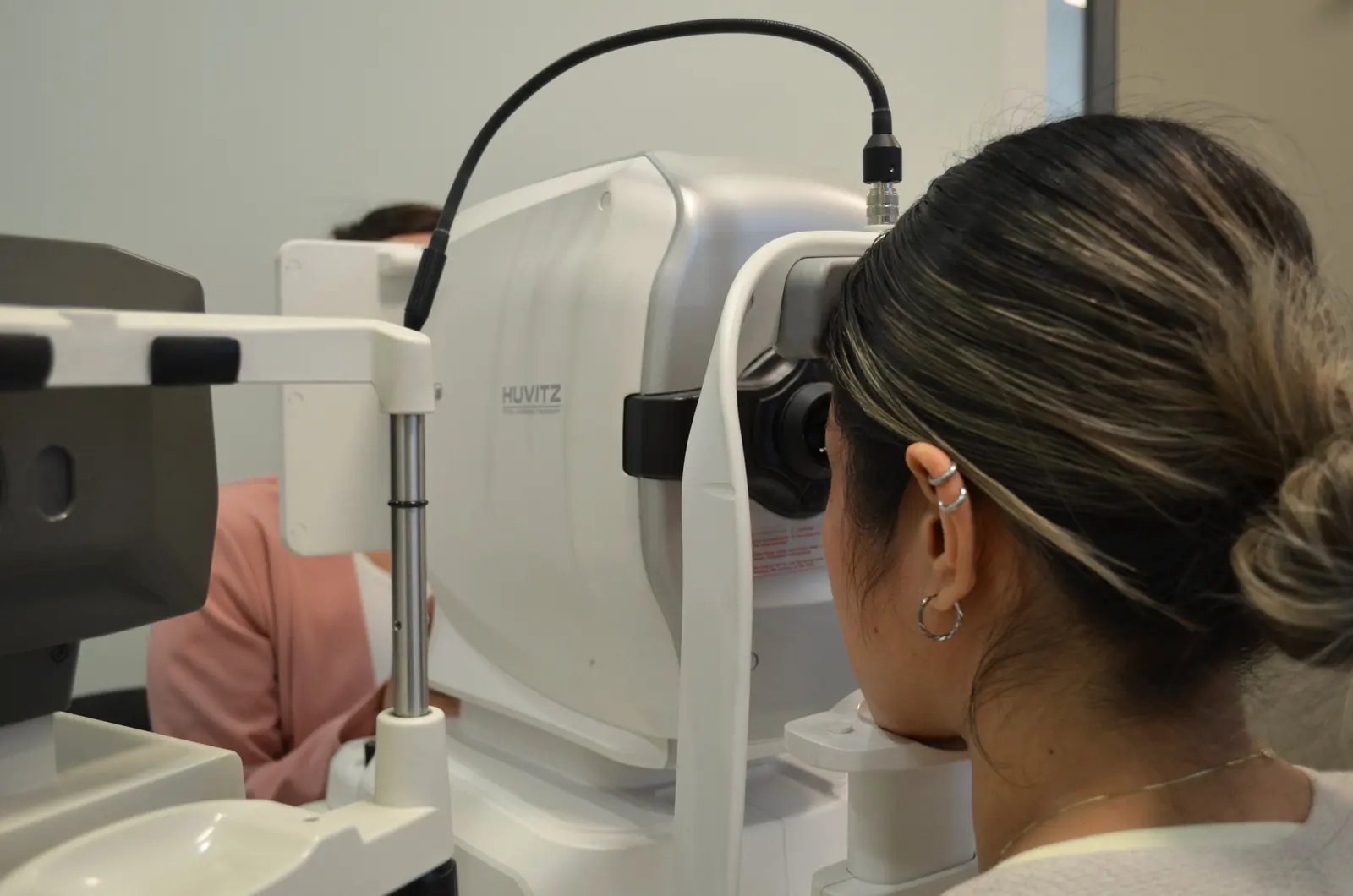
We check how clearly your child sees far away and up close, measure their glasses prescription, look at how their eyes work together and check the health of their eyes. Drops that relax focusing may be used so the prescription can be measured accurately.
Family history and habits
We ask about nearsightedness in the family, time spent outdoors, and how much time your child spends on close work and screens.
Choosing a plan together
Your optometrist explains the results and the options that suit your child’s age, eyes and routine, so you can decide together.
Options
Myopia Control Options
Myopia control lenses (glasses and soft contact lenses), ortho-k and low-dose atropine drops have research showing they can slow myopia on average, and time outdoors is linked with less myopia. None of them cures myopia, and how much they help varies from child to child. Ask us about myopia control at your child’s eye exam.
Which options does the clinic offer?
All five are shown as categories, not brands, until the clinic confirms what it offers. Remove any the clinic does not offer, or mark it “ask us about a referral”. Low-dose atropine stays educational: no brand, price or efficacy figure. Red-light therapy is deliberately left out (safety concerns, no Canadian licence found).
Time outdoors and screen breaks
Time outside in daylight is linked with a lower chance of myopia starting, and may help slow it once it has begun. Research suggests aiming for about two hours outdoors a day. For close work and screens, take regular breaks: look up and into the distance at least every 30 minutes.
Follow-up
How Often Are Follow-Up Visits?
Myopia control is a plan that runs over several years. Regular check-ups show how your child’s eyes are changing and whether the plan needs adjusting; your optometrist will tell you when to come back.
Consistency matters: glasses, lenses or drops need to be used every day, as directed.
There is no fixed age to finish. Your optometrist will look at your child’s age and how stable their eyes have been before recommending any change.
Children’s eye exams
Coverage
Coverage and Costs
-
Children’s eye exams
Routine eye exams for children and teens under 19 are an MSP benefit in BC, once every 11 months. MSP covers a portion of their eye exam so the cost is lower for children to undergo annual eye tests.
MSP covers a portion -
Myopia control treatment
Our fees depend on the service provided. Please contact our office to discuss what would be the right appointment for you.
-
Extended health benefits
If you have extended health coverage, your plan may help with glasses or contact lenses. We can direct bill most insurances for you.
FAQ
Myopia Control Questions
Have a question we haven’t answered here? Call us at (604) 553-3900 or ask at your child’s next eye exam.
Reading a minus (−) prescriptionAt what age can myopia control start?
There is no single starting age. Myopia control is usually discussed as soon as a child is found to be nearsighted, and sometimes earlier for children at higher risk. Your optometrist will talk with you about timing at your child’s eye exam.
Will myopia control cure my child’s nearsightedness?
No. There is no cure for myopia, and treatment does not reverse it. Myopia control aims to slow how quickly it increases, and results vary from child to child. Your child will still need glasses or contact lenses to see clearly.
Do blue-light glasses help with myopia?
Research has not shown that blue-light-blocking glasses slow myopia. The same goes for bifocal or progressive lenses, pinhole glasses and wearing a weaker prescription than your child needs.
What happens when treatment ends?
With myopia control glasses and soft contact lenses, studies have not found a rebound effect once they are no longer worn. With atropine eye drops, myopia can speed up again after the drops end, especially at higher strengths, so any change to the plan should be made with your optometrist.
Do screens cause myopia?
More time on close work, including screens, and less time outdoors are both linked with myopia. Taking a break from close work at least every 30 minutes and spending time outside in daylight are good habits to build.
Is myopia control covered by MSP?
MSP covers a portion of routine eye exams for children and teens under 19, once every 11 months. An extended health plan may help with glasses or contact lenses. Please contact our office to discuss what would be the right appointment for you.
Book a visit
Request an Appointment
We will respond by phone or e-mail within 24 hours. If you’re looking to book urgently, give us a call during operating hours at (604) 553-3900.